Trail Running Music BPM: What Tempo to Use on Climbs, Flats and Descents
Jordan MillsNovember 9, 2026 · 13 min read

Trail Running Music BPM: What Tempo to Use on Climbs, Flats and Descents
For most trail runs, aim for music between 120 and 140 BPM on easy and steady efforts. Go above 140 BPM for harder work, and let your cadence, not the song, set your pace. Trails keep changing your effort, so a single fixed-BPM playlist only fits part of the run. Below you’ll find the ranges, how to find your own number, how to adjust for terrain, and how to keep your ears open on the trail.
TL;DR
- Easy and recovery trail runs: roughly 120 to 130 BPM. Long and general runs: 120 to 140 BPM. Harder efforts: above 140 BPM.
- BPM is the tempo of a song. Cadence is your steps per minute. Matching the two is what makes the beat useful.
- Climbs, flats and descents call for different tempos, so a single fixed playlist works best on steady sections.
- On technical ground, keep one earbud out, keep the volume low, or use bone conduction headphones.
- A tool that adjusts tempo to your heart rate or cadence removes the guesswork of building playlists by hand.
Table of Contents
- What BPM means for trail running, and how it differs from cadence
- BPM ranges by effort level
- Find your own cadence first
- What the research says about cadence-matched music
- How hills and rough ground change the plan
- Build a consistent-tempo playlist
- Listening safely on trails
- Perspective
- Try tempo that follows your effort
- A simple trail-music plan for your next run
- FAQ
- Sources
What BPM means for trail running, and how it differs from cadence
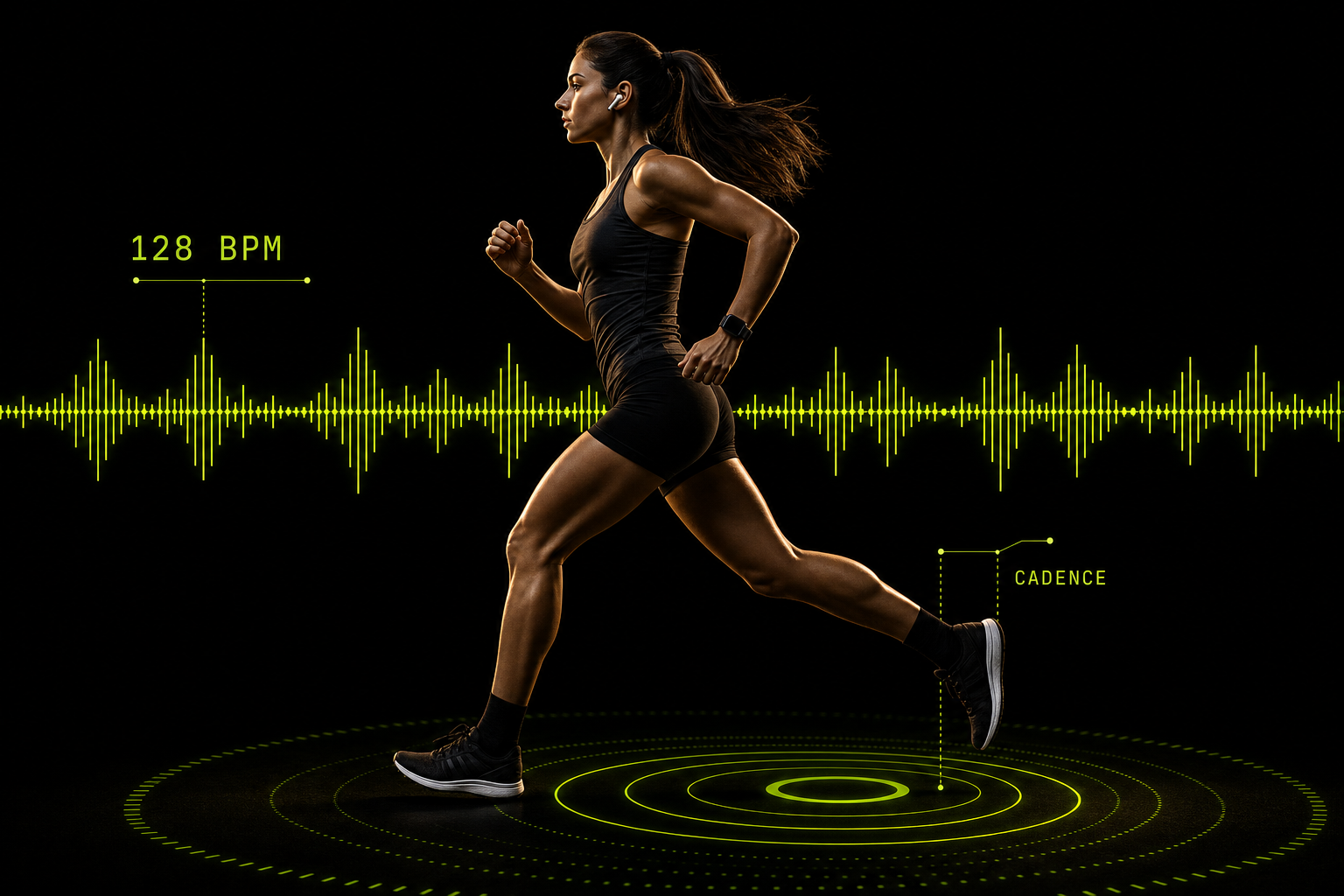
BPM is the number of beats in one minute of a song. Cadence is the number of steps you take in that same minute. A running-gear retailer’s guide puts it this way: matching the two means lining up your left and right foot strikes with the rhythm of the playlist.
The terms get mixed up. When runners say “180 bpm,” they usually mean cadence in steps per minute, not a song tempo or a heart rate. A song at 160 BPM doesn’t force 160 steps per minute. It gives you a pulse to lock onto if you choose to.
Heart rate is a third number, and it matters on trails more than on roads. Hills push your heart rate up while your pace drops. That’s why many trail runners think in effort zones rather than speed, and why the music that suits a climb often differs from the music that suits a flat stretch.
BPM ranges by effort level
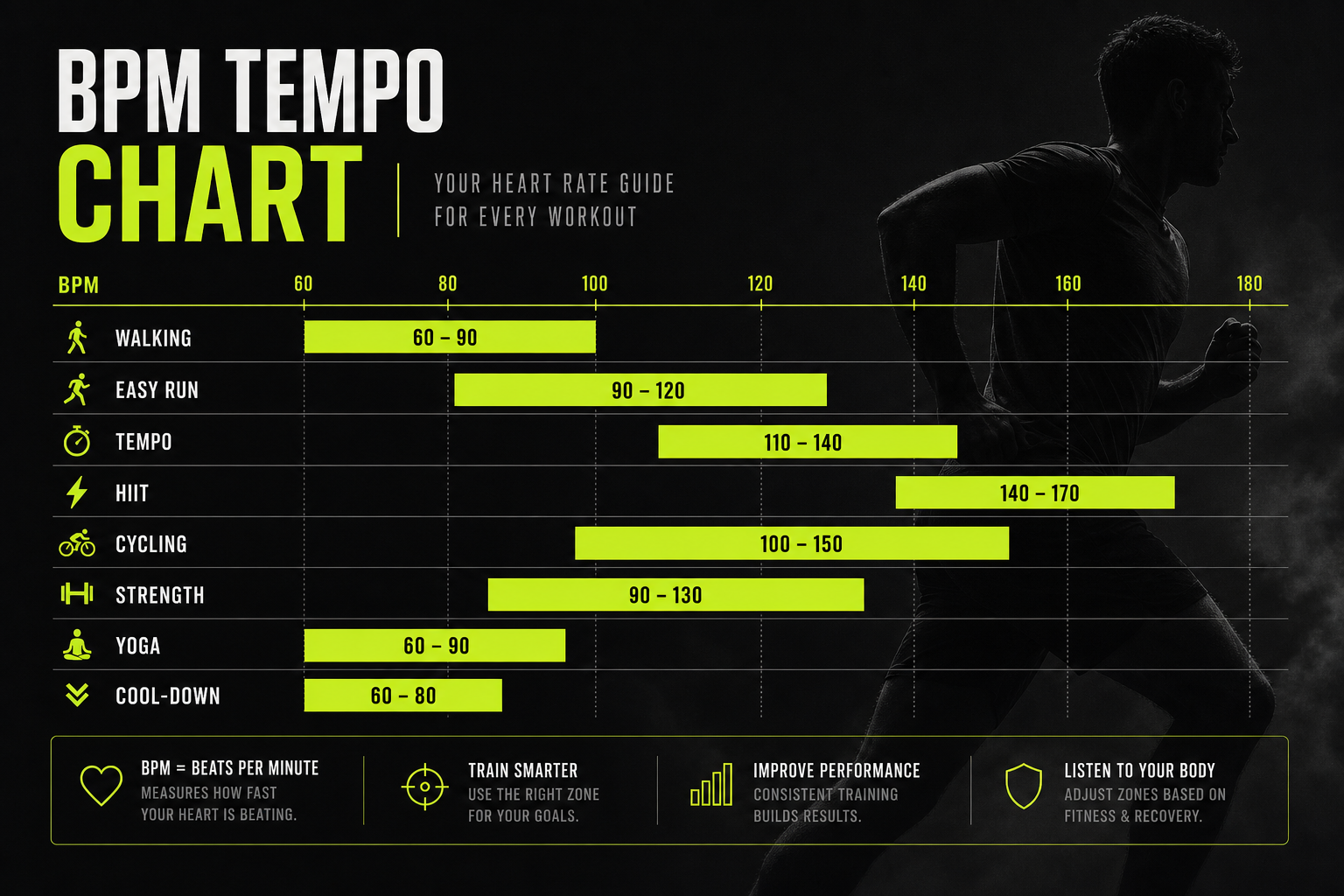
The ranges you’ll see in running guides overlap, but they agree on the broad shape: slower tempo for easy effort, faster tempo as intensity rises.
| Effort | Typical music BPM | Source |
|---|---|---|
| Warm-up, easy or recovery | Below 120 to 130 | Running music guide, media guide |
| Long and general training runs | 120 to 140 | Running music guide |
| Tempo or race-pace efforts | 140 to 160 | Media guide |
| Sprints and hard intervals | Above 160 | Media guide |
One guide credits sport psychologist Costas Karageorghis of Brunel University London with the finding that runs at about 60 percent of max heart rate tend to pair best with 120 to 140 BPM. That covers most of what trail runners do most of the time: long, conversational efforts on varied ground.
Treat these numbers as starting points. Your stride length, the terrain and your fitness all move the tempo that feels right. If you want a deeper look at one effort level, our guides on 130 to 140 BPM threshold run music and 125 to 140 BPM focus run music go through it for road and treadmill runners.
Find your own cadence first
A playlist ranges are only useful if you know where your body naturally sits. Here is the method the same retailer guide describes:
- Warm up, then run at an easy everyday pace.
- Count the strikes of one foot for 60 seconds.
- Double the number. That is your cadence in steps per minute.
Repeat it on a flat stretch of trail and, if you like, on a moderate climb. You will see your cadence drop uphill. That drop is normal and is the reason one number never covers a whole trail run.
If you want to raise your cadence, change it gradually. The guide recommends shifts of two to six steps per minute, with no more than a 5 percent increase at once. Our piece on raising cadence with 1 to 3 percent tempo shifts takes the same idea in smaller steps, and a five-to-ten-minute metronome versus music test shows which cue works better for you.
There is a practical catch. Researchers behind a 2020 trail study noted that matching a cadence between 150 and 180 steps per minute is hard with ordinary music selection, because there is not much existing music at 180 BPM. Many runners solve this by running to half-time or double-time feel, or by using music whose tempo is adjusted for them.
What the research says about cadence-matched music
The evidence is encouraging, with a few details worth knowing before you build your expectations.
Rhythm and efficiency. A 2013 PLOS ONE study found that time to exhaustion was longer with acoustic stimuli than without. Motivational music slightly lowered perceived exertion at submaximal intensity, and the beat helped runners hold pace by coupling their cadence to the tempo. The authors concluded that motivational music with a very prominent, consistent beat matched to cadence will likely work best.
On an actual trail. In a 2020 randomized trial of 54 runners on a trail course with 76 feet of elevation, cadence-synchronous music improved performance and lowered perceived effort in male runners. Among female runners, cadence-synchronous music improved performance, while heart-rate-synchronous music reduced perceived effort the most and let that group run the longest of all conditions tested. The takeaway is that the best sync target may differ between runners, and heart rate is a worthwhile one on trails.

Personalized, interactive music. A 2025 systematic review and meta-analysis in JMIR Human Factors found significant gains in physical activity and mood with personalized interactive music systems, with faster tempo a significant moderator. It did not find significant effects on ratings of perceived exertion.
Where the effect fades. Karageorghis’s research, as summarized by a coaching site, suggests that above roughly 75 percent of aerobic capacity music stops reducing perceived exertion. The mood and motivation benefits remain, but the effort-lowering effect shows up most on easy runs, long runs and moderate training. That matches how most people use music on trails.
Impact. A Belgian study found that with music playing, runners showed an average 17 percent increase in impact loading across all conditions. The authors tie it to music’s arousal and attention-shifting effects. It is a reason to keep your footing and your form in mind when the beat gets exciting, especially on descents.
How hills and rough ground change the plan
A road playlist assumes one steady pace. A trail run gives you a steep climb, a runnable flat, a rocky descent and a stop at a viewpoint inside the same hour. Your cadence, heart rate and effort move through all of it.
A practical way to think about it:
- Climbs. Your cadence falls and your heart rate climbs. Slower tracks, toward the lower end of 120 to 140 BPM, fit the shorter, steadier steps of hiking or power-running uphill.
- Flats and smooth singletrack. This is where a cadence-matched beat earns its keep. Use the 130 to 150 BPM range, depending on your pace, and lock in.
- Descents. Turnover rises, but the ground is the priority. A faster beat can help quick, light steps, but on rocky descents it is better to focus on the trail than on rhythm.
- Technical sections. Choose steady, predictable tracks with fewer surprises, or take one earbud out. Attention on roots and rocks matters more than the song.
This is the weakness of a fixed playlist. It can sit well with one terrain type and fight another. Runners who build by hand often end up with several lists, one for each part of a route, and then the route changes. For a deeper look at how tempo can follow your effort instead of the other way around, see our guide to long run music that adapts to your cadence.
Build a consistent-tempo playlist
If you prefer to build your own, a simple process works:
- Decide the purpose. Easy long run, hill workout, or a mixed route?
- Start with about 10 songs you love. Motivation matters as much as tempo.
- Check each song’s BPM. A running playlist guide suggests using songbpm.com or a streaming service’s BPM filter.
- Build to about 1.5 times your run length so you never run out of music.
- Sequence by effort. The same guide suggests warm-up songs around 130 BPM and the main block around 170 BPM for a road-style run; on trails, shift those numbers down for climbs.
- Download it for offline use. Trails drop signal, and a stalled stream breaks your rhythm.
When your playlist jumps from 130 to 175 BPM between songs, your stride is pulled in two directions. Group songs by tempo band, and move between bands in small steps.
Listening safely on trails
Trail safety deserves more weight than any BPM chart. Researchers writing in Wilderness & Emergency Medicine noted that in wilderness settings the risks of headphone distraction can be amplified, because sounds and sights from the terrain, other people and wildlife matter. They recommend that participants forgo earphones or wear them in one ear.
Some practical habits:
- Use one earbud, or keep volume low. Leave No Trace’s multi-use trail guidance says to keep the volume low or use only one earbud so you stay alert to other trail users and surroundings. Its principle on being considerate also advises one earbud so you can stay aware of your surroundings.
- Consider bone conduction. A 2011 study found bone conduction earphones gave the same level of enjoyment as conventional earphones with higher situational awareness.
- Pull the music on technical ground. Many trail runners remove headphones on rocky sections and technical descents, since music competes for the same attention you need for foot placement.
- Check event rules. The authors of the headphone study above note that Road Runners Club of America guidelines recommend against headphones in running events and group training, and USA Triathlon disallows personal audio devices. Read the rules for any race you enter.
- Listen for others. Mountain bikers, horses, hikers and wildlife all share many U.S. trails. Hearing them coming is part of trail etiquette.
Perspective
We built Repbeats around a simple observation: the best tempo is not a number on a chart, it is the one that matches what your body is doing right now. On a trail, that changes every few minutes.
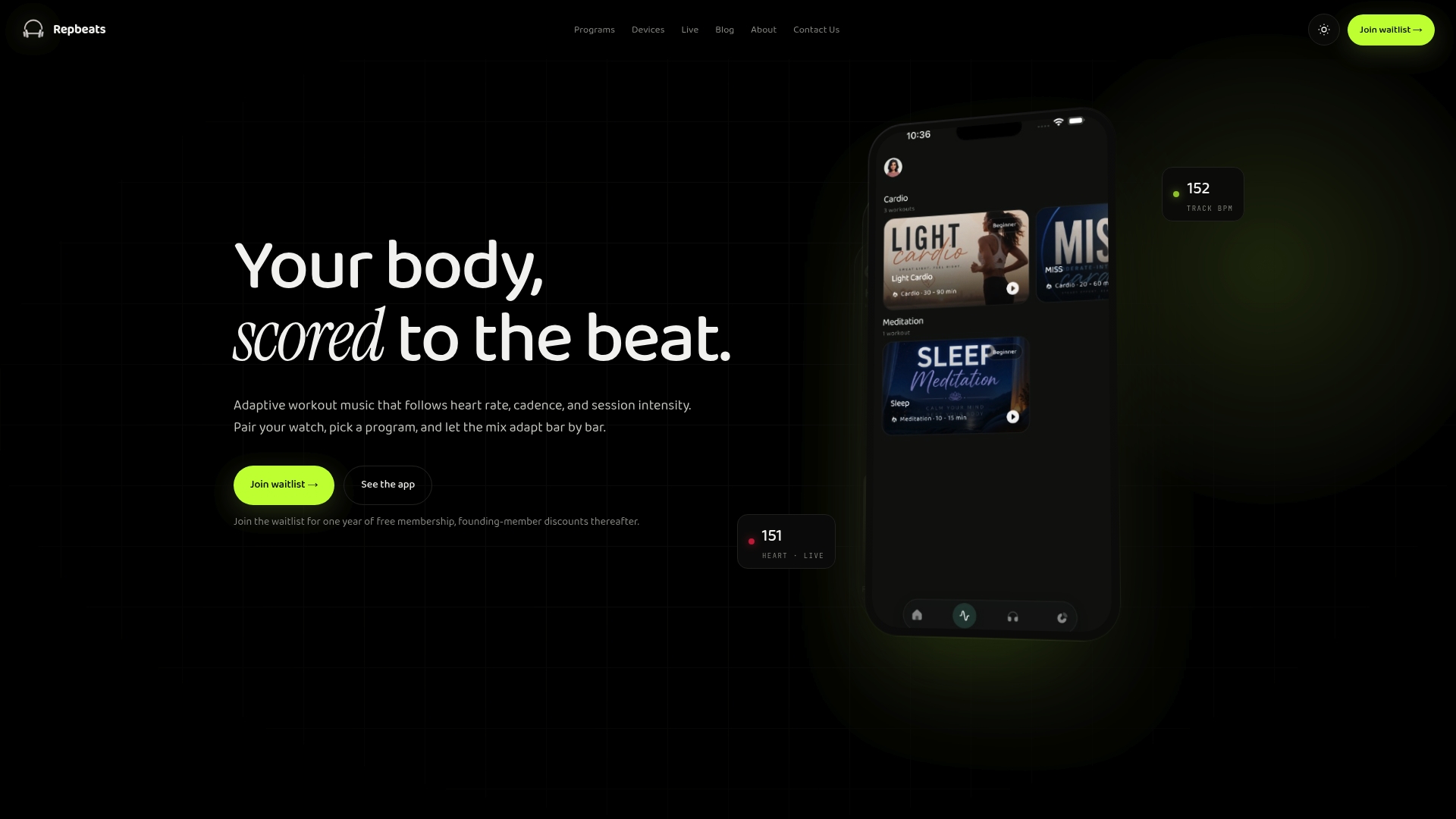
A static playlist asks you to adapt to the music. We think the music should adapt to you. Repbeats synchronizes music tempo to heart rate, cadence and session intensity using live data from wearables such as Apple Watch and Fitbit, and its auto-DJ updates the BPM every bar, so the beat can follow your effort instead of fighting it.
The research points the same direction. The 2020 trail study found that cadence-synchronous music and heart-rate-synchronous music each helped, and that the best target differed between runners. We designed the app so that you are not stuck guessing which cue suits you or rebuilding playlists for every route.
We also keep our scope tight. Our privacy policy limits device access to workout data only, because a music tool that works with your watch should ask for nothing else.
Jordan Mills
Try tempo that follows your effort
If you’re tired of building playlists for climbs, flats and descents, Repbeats matches music to your heart rate, cadence and session intensity in real time. It reads live data from your wearable and updates the beat every bar, so the tempo moves with the effort you are actually making. It also includes cardio and meditation programs, music library search, real-time playback control and program scheduling.
The waitlist launch includes a free year, and the app is a freemium subscription after the trial. Start from the Repbeats home page and see how it fits your next run. If you also train on a treadmill between trail days, our guides to treadmill cadence music with live BPM sync and tempo-matched treadmill running music cover that setup, and the seven-step cadence lock setup shows how to pair a wearable with your music.
A simple trail-music plan for your next run
Put it all together with a plan you can use this weekend:
- Measure your cadence on a flat, easy stretch using the 60-second count.
- Pick your effort. For an easy or long trail run, start in the 120 to 140 BPM band.
- Plan by terrain. Slower on climbs, steadier on flats, and no music demands on technical descents.
- Move in small steps. Change tempo by two to six steps per minute at a time, not in big jumps.
- Keep one ear free. One earbud, low volume, or bone conduction, and know the rules of any event you enter.
- Review afterward. Note which tempo felt smooth on each terrain and adjust the plan.
For a hard interval day or race effort above about 75 percent of aerobic capacity, expect the music to lift your mood more than it lowers your sense of effort. That is fine. Use it for energy and rhythm, and rely on your breathing, your watch and the trail itself for pacing.
FAQ
What BPM is best for trail running music?
For easy and long trail runs, 120 to 140 BPM suits most runners. Tempo-style efforts tend to pair with 140 to 160 BPM, and sprints or hard intervals with songs above 160 BPM. Your cadence and the terrain should decide where you land inside those ranges.
Should my music BPM match my cadence?
It can help. Research on auditory-motor synchronization found that a prominent, consistent beat matched to cadence helped runners hold pace and run longer. To find your number, count one foot’s strikes for 60 seconds at an easy pace and double it. Change gradually, by two to six steps per minute at a time.
Is it safe to run trails with headphones?
It is safer with precautions. Use one earbud or keep the volume low so you can hear other trail users, wildlife and hazards, as Leave No Trace advises. Bone conduction earphones keep your ears open. Remove audio on technical descents, and check race rules, since some events and organizations prohibit headphones.
Can one playlist work for a whole trail run?
It can work for steady sections, but hills change your cadence and heart rate, so a fixed BPM fits some stretches and not others. Group songs into tempo bands for climbs, flats and descents, or use an app that adjusts tempo to your heart rate and cadence as you run.
Sources
- Running BPM guide and how to find your cadence (running retailer expert advice)
- What running pace is 180 BPM? Cadence and speed guide
- Choosing the right music to power a run
- Best running playlists for motivation, ACTIVE.com
- On performance and perceived effort in trail runners using sensor-controlled music (PMC, 2020)
- The power of auditory-motor synchronization in sports (PMC, 2013)
- Bood et al., PLOS ONE (2013)
- The effect of (a)synchronous music on runners’ lower leg impact loading (Ghent University)
- Personalized interactive music systems for physical activity, JMIR Human Factors (2025)
- Can music make you run faster? The research explained
- Running playlist building guide
- Headphones and handhelds as contributors to preventable injuries, Wilderness & Environmental Medicine
- Effectiveness of advanced bone conduction earphones (2011)
- Leave No Trace: Be considerate of others
- Leave No Trace: Multi-use trail responsibility